
ABOUT
1,300 years of Christian Worship
Our church building stands on an ancient Celtic site dedicated to St Brendan (the Navigator) on the banks of the Santry River at Tonlegee Road on the edge of Tonlegee townland. On the opposite bank of the river is the site of St Brendan's Well. In a number of locations on the land bordering the churchyard, traces of a circular ecclesiastical ditch have been discovered.
Along with a plain granite cross and the base millstone from a horizontal water mill, both of which are thought to date from the 9th century and which are kept in the church, the National Museum holds the Coolock Brooch - a bronze penannular brooch from the same period, and some other later artefacts. The earliest dated gravestone, from 1688, is kept within the church.
It was built on the site of a former ruined church and was dedicated to St. John the Evangelist. In 1792, a tower and spire was erected and around 1815 the two transepts and an apsed chancel were added to increase the capacity.
The nave of the present church was consecrated on 21st September, 1760 by the Lord Archbishop of Dublin , Most Reverend Charles Cobbe D.D., of Newbridge House, Donabate.
In 1820, the Rev'd Henry Moore was appointed as Vicar by his relative, the Earl of Drogheda. From 1828 to the 1879, the office was held by Rev. William Maconchy, who is recorded as marrying Anna King, from Donaghmede House, in the parish church in 1823.
At that time it served a small rural community interspersed with some 'big houses'. Now 250 years later, the area has seen dramatic changes and particularly over the last 50 years, with massive urban development. Many of the former 'big houses' have become suburban areas in their own right, e.g. Darndale, Beaumont, Bonnybrook and Kilmore.
Coolock was eventually placed in a Union of parishes with Raheny in 1960. The Rector of Raheny was appointed in charge of both in March 1960, and the union was completed when he became Rector of Coolock in July of that year. From then on, there was to be a rector in Raheny, a curate in Coolock (the first was appointed in 1963), two churches, and a shared school (Springdale National School
For over twenty years, there was only one Select Vestry serving the two parishes, but this ended in 1981.
The next rector of the United Parishes was Rev Wilbert Kelly, appointed in 1970, and he was succeeded in 1975 by Canon Cecil Wilson, then Rev James Carroll, followed by the Rev Norman McCausland. The current Rector is the Rev Kevin Ronne.
*
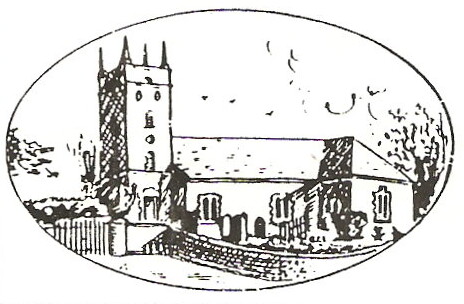
St John’s was built as a small country church in 1760, has artifacts from the 9thC, has associations with St Brendan the Navigator, and has small but beautiful examples of stained glass by Edward Burne-Jones & William Morris, Alfred E Child & Sarah Purser (An Tur Gloine) and Mayer and Co. (Munich).
On the other hand, All Saints’ Church is a magnificent, ornate building, erected in 1866 on the corner of St Anne's estate, thanks to the generosity of Lord Ardilaun of St Anne's, a member of the Guinness family.
Parish Bounds
Our parish covers the large area between Raheny and Santry, which until the 1960s was mainly rural. It includes some or all of the the relatively new neighbourhoods of Coolock, Artane, Kilmore, Bonnybrook, Darndale, Ayrfield, Clare Hall, Priorswood, Beaumont and Harmonstown.